After selection of your ZIP code, we designate the relevant staff to attend to you at once.
► Tested: Up to 50 times longer service life compared to conventional 3D printing materials
► More than 5,000 active customers around the world rely on our wear-resistant 3D printing polymers
► Replacement parts, prototypes and series parts in batch sizes from 1 to 10,000 ready to ship in one to three days with our online 3D printing service
Just upload a 3D model and use the immediate price calculation to select the suitable material and procedure. Worldwide delivery.
► Upload doesn't work? Click here to start the upload directly in the 3D printing service tool.
With the innovative MULTI changeover system, Thyssenkrupp has invented a pioneering lift system for skyscrapers, the linear drive of which moves cabins in a continuous loop, whereby they can travel not only vertically and horizontally but also at a slanting angle. In this application, complex 3D printed plain bearings made of the wear-resistant polymer iglidur I3 were used due to their fast availability and their outstanding guiding characteristics.
Fast availability at a low price and use under hygienic conditions were important prerequisites for this 3D printed gripper. It is used to package cosmetic products and has the special advantage of working without additional lubrication, hence fulfilling hygienic requirements.
Our individual requirements have been implemented perfectly and our new accelerator ring for sporty, flat steering wheels works smoothly thanks to the low-friction polymer parts from 3D printing. We are pleased with the very fast and solution-oriented co-operation.
Martine Kempf
Kempf SAS
Easelink, a company from Graz, has developed "Matrix Charging", a charging system consisting of two components. A charging pad connected to the mains is installed in the car park. A connector on the bottom of the e-car drops down when parked over the pad. The charging process starts automatically, without the driver having to connect a cable. Use the igus® 3D printing service to make sure the development of prototypes remains cost-effective whilst ensuring high quality.
Inspired by Formula 1, the student teams of the "Formula Student Germany" construction competition compete with each other. For constructing their racing cars, the Formula Student Team from Weingarten near Ravensburg needed customised plastic pinions, amongst other things. Using the igus 3D printing service , these components were not only produced quickly, but also made of wear-resistant iglidur material.
Wear-resistant parts made of durable iglidur polymers for classic vehicles. Whether a car, tractor, motorcycle or plane: 3D printing tremendously simplifies the procurement of spare parts and usually even delivers better quality and durability than original parts.
When pianos are built traditionally, most of their parts are made of wood. Since this classic material is frequently impaired by temperature fluctuations and moisture, the instruments must be frequently maintained. Phoenix Pianos has decided to modernise piano-building, integrating new manufacturing methods and materials. By using hammers printed from high-performance polymer, the engineers were able not only to extend component service life and improve precision, but to enhance sound quality.
Innovations in the field of industrial 3D printing.
New products and services for additive manufacturing with wear-resistant plastics.
Get to know our new materials and tools now.
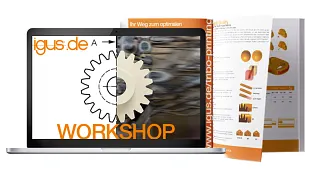
Free online tools for 3D printed components: easily configure 3D templates for 3D printing and determine the foreseeable service life of printed components made of iglidur on the basis of the application parameters entered. No previous knowledge of CAD and no registration required.
How do 3D printed machine elements made of iglidur polymers behave compared to PLA, ABS and other regular materials and manufacturing processes? We provide insights from our test lab.
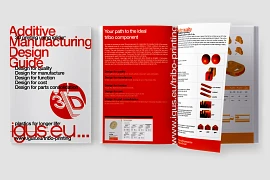
Practical tips on designing function parts for manufacturing in 3D printing service. In addition to material and manufacturing method, the right component design plays a decisive role in increasing service life, minimising wear, and optimising the coefficient of friction.
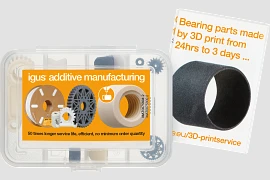
Discover our materials and additive methods for 3D printing. Order our free sample box with a selection of printed samples and iglidur materials from igus additive manufacturing. We use our high-performance plastics for our in-house 3D printing service for wear-resistant components and for filament and laser sintering powder production.
On which 3D printers can the iglidur laser sintering powders be processed?
igus uses the EOS Formiga P110. In principle, the tribo-materials iglidur I3-PL and iglidur I6-PL should be able to be processed on laser sintering 3D printers with CO2 lasers, if the printing parameters can be adjusted. Positive feedback has already been received from customers with EOS Formiga P100 as well as 3D systems equipment. Due to the different absorption of the laser energy, it is not suitable for low-cost systems such as Sinterit Lisa or Formlabs Fuse 1. The iglidur I8-ESD-PL is suitable for this due to its black colour; there has already been positive feedback from customers here.
So far, I have always purchased components made of PA12 or from the MJF process; which igus laser sintering powder is comparable?
All iglidur laser sintering materials are basically suitable, whereby the most suitable material can be selected depending on the requirement. iglidur I3-PL is the most frequently selected and most cost-effective laser sintering material in the igus 3D printing service.
Can threads be printed?
Fastening threads can be printed directly from M6 or comparable dimensions. For this, the geometrical shape must be integrated in the 3D model. Alternatively, threads can also be cut or, in the case of heavily stressed or frequently screwed threads, thread inserts can be introduced. Please request a separate quotation for this.
What about drive threads?
igus can provide components with threaded holes for trapezoidal or dryspin lead screws upon request. Lead screw nuts for trapezoidal threads can be generated with the igus CAD configurators. For dryspin threads, please contact your igus contact person, as this is a protected geometry.
84 Genting Lane
#06-03 Axxel Innovation Centre
Singapore 349584
Can the material be milled or otherwise mechanically processed?
Appropriate mechanical reworking is possible. For machining on the lathe, the usual measures for unfilled plastics (e.g. POM) apply; here, a fixture may have to be made to prevent deformation of the component during clamping. Due to the increased wear resistance of the iglidur materials, grinding is more demanding than with standard plastics.
Which iglidur laser sintering material is best suited for gears?
iglidur I3 has the longest service life of all igus 3D printing materials in tests with spur gears. For worm gears, iglidur I6 is better suited due to the sliding relative movement between the counter partners.
Can the surface of the components be smoothed?
For the smoothing of laser sintering components in the igus 3D printing service, vibratory grinding/rotofinishing and chemical smoothing are used. In vibratory grinding, the surface of the component is levelled with the aid of small wheels, thereby reducing the roughness. In chemical smoothing, the surface of the component is dissolved with the help of a chemical, thus smoothing the surface and closing it.
What are the advantages and disadvantages of surface finishing?
The vibratory finishing minimally removes particles from the surface and can, for example, anticipate the shrinkage of a plain bearing. It is a cost-effective and quick form of after-treatment, but is ineffective in places that the sliding bodies do not reach (e.g. inner edges, channels). The process is only suitable for smaller components with simple geometries.
The chemical smoothing process dissolves the plastic on the surface of the component. After the solvent has evaporated, a dense surface remains, while the untreated component always has a certain porosity, which plays a role in the use of lubricants, adhesives, compressed air as well as vacuum. This surface treatment produces even smoother surfaces than vibratory grinding, but also means a higher surcharge as well as a longer delivery time of the component of 9-12 working days.
Both surface treatments can be configured and ordered directly online in the iglidur Designer in the "Finishing" tab.
What should be considered when using with vacuum?
Due to the integrated solid lubrication, igus plain bearings also function in a vacuum. Depending on the application, the maximum permitted gas release on the plastic component must be reduced to a minimum. Due to the higher density, the laser sintering process is recommended here rather than the FDM process. The gas release of laser sintering plastic components can be reduced by first drying and then infiltrating the parts. Both can be offered by igus and carried out directly during production.
Are 3D printed components gas-tight?
igus has so far been able to gain experience with components produced using the laser sintering process. It is known that untreated components do not have a high gas tightness. Gas tightness can be significantly improved by an infiltration process or by chemical smoothing, which has already been confirmed by customer feedback. However, the gas-tightness always depends on the wall thickness; the thicker the wall, the more gas-tight the component. For components produced by filament printing, a lower gas tightness can be assumed, therefore the laser sintering process is recommended here.
Is there a coloured powder / which colours are available?
igus does not offer coloured laser sintering powder. Due to the increased effort involved in changing materials, the production of laser sintering components generally involves the subsequent colouring of the components instead. It is also possible for components made of iglidur materials. Over 20 standard colours are available and special colours are also possible. The tribological properties of the material can be affected by colouring.
The iglidur tribo-materials are basically white (iglidur I6, I10), yellow/beige (iglidur I3) or anthracite/black (iglidur I8-ESD). For black components, iglidur I8-ESD is sometimes the better choice compared to coloured components, as the component is through-dyed and the delivery time and part costs are not affected. As a result, the black colour is also more weather-resistant.
Which filament 3D printer does igus recommend?
Due to the large number of systems available on the market, no clear recommendation can be made. Basically, the printer should have a sufficiently large and closed installation space as well as a heated print bed. In addition, a print head with two nozzles, or two independent print heads that can heat up to 300°C, is recommended.
The device should also be freely configurable, i.e. the processing parameters should be adjustable and it should be possible to process filaments from third-party manufacturers. Other useful specifications include interchangeable magnetic plates, network connectivity, direct drive extruder and automatic print bed levelling.
You should be able to process our filaments on most common printers without any problems. We are also happy to send you material samples if you have purchased a printer - you are welcome to contact us.
Can I process igus filaments on my 3D printer?
In most cases, yes, as long as the 3D printer allows the processing of third-party materials. If the printing parameters (speeds, temperatures, etc.) can be set yourself, there is nothing to be said against it.
Can igus filaments be processed on Stratasys/Makerbot/Markforged printers?
No, because it, like some others, only allows the use of proprietary filaments.
What filament diameters does igus offer?
Filaments from igus are available in diameters of 1.75mm and 2.85mm. Some 3D printers require 3mm diameter filament. In practice, this refers to the diameter 2.85mm, so it should be used synonymously. Therefore, the igus "3mm filament" can be used on printers that require 2.85mm or 3mm filament.
Only the high-temperature filaments (iglidur RW370, A350 etc.) are so far only available in 1.75mm.
What are the dimensions of the spools of the tribofilaments?
The dimensions of the filament spools can be seen on the product pages in the shop.
The profiles for Cura do not work, what can I do?
The profiles for iglidur I150-PF, I180-PF and other tribofilaments can be installed in Cura via the Marketplace. The software must then be restarted. The profiles only work for Ultimaker 3D printers (3, S3, S5) and the materials can be selected only if such a device is set up in Cura. There are no profiles available for download in Cura for other 3D printers.
Is there a profile/parameter set for tribofilaments for the 3D printer x?
For most 3D printers, igus offers the general processing instructions for the respective tribofilament for download. It can be found in the download area on the product page of the respective material in the shop.
Is there a fibre-reinforced filament from igus?
igumid P150-PF is a fibre-reinforced material, which has a much higher stiffness and strength than the tribofilaments.
Which material is suitable as support material for tribofilaments?
Depending on the tribofilament, various (water-)soluble filaments, such as PVA, from different third-party suppliers can be used. For filaments such as iglidur I180-PF, I190-PF and J260-PF with a higher processing temperature, a suitable support material for higher temperatures should be used if necessary (e.g. Formfutura Helios).
An alternative are so-called "breakaway" support materials, which can be easily removed by hand after 3D printing. For some tribofilaments, e.g. iglidur I150-PF, PLA is also suitable as a support material, which can be removed manually without much effort after printing.
For the high-temperature tribofilaments (iglidur RW370, A350 etc.), we are unable to make a recommendation at the moment.
Which tribofilament is best suited for gears?
The best results in the service life comparison of the tribofilaments as well as some standard 3D printing filaments are achieved by iglidur I190-PF and igumid P150-PF. A detailed report on this is not available, but is planned for the future.
How to get igus filaments to adhere to the printing plate?
For the tribofilaments, igus offers the adhesion promoter for tribofilaments as well as the adhesive films , which can be ordered in the shop. The adhesion promoter is applied as a liquid to a printing surface (e.g. glass) and serves as an adhesion medium as well as a release aid when the plate has cooled down. The film is glued onto the printing plate and provides improved adhesion. Only the adhesion promoter is suitable for Ultimaker 3D printers.
Is there a coloured filament/what colours are available?
As these are technical materials, the colour is secondary. Therefore the filaments are only available in white (iglidur I150-PF, I180-PF) or beige/yellow (iglidur J260-PF, I190-PF, RW370-PF). As a variant of iglidur I180-PF, for special applications iglidur I180-BL-PF is available in black, as well as iglidur I151-PF and A350-PF for the food industry in blue.
Can the surface of the components be smoothed?
For some tribofilaments this is possible and has already been tested experimentally. For an assessment of your individual application, please get in touch with your igus contact person.
Do tribofilaments need to be dried?
Drying of the filaments is generally recommended from time to time to ensure high surface quality, best mechanical properties and the best printability of the material. Some filaments should be dried more frequently, for example iglidur I190-PF, iglidur A350-PF and iglidur RW370-PF. The filament spools can be dried in a standard household convection oven or in a dry air oven specially designed for this purpose.
What is the maximum drying temperature?
The rule of thumb is a drying temperature that does not exceed the maximum application temperature of the plastic, but also does not damage the plastic reel. For filaments on matt black plastic spools max. 70°C, on transparent spools max. 90°C and on glossy black spools (high temperature filaments) max. 125°C with at least 4-6 hours drying time.
Is post-processing as in the laser sintering process also available for FDM components?
Post-processing steps such as mechanical finishing (drilling, turning, milling) and the setting of thread inserts is also possible for components made using the FDM process. Feel free to contact us if you need support for your application in this regard.
Which materials does igus offer in the 2K or 4K printing service?
In addition to the tribofilaments, a range of other filaments, such as a flexible material (TPU) and other materials, are also available for the multi-material 3D printing service. Please contact us if you are interested.
Which materials can be combined?
Some filaments can form a material compound due to their molecular composition. Many others cannot be easily combined with each other, so that a form-fit connection should be constructed here. For more information, see our blog post on multi-material printing.
Are there resins for the SLA/DLP process from igus?
No, not at present. But it is quite conceivable that there will be a tribo-resin in the future. In the SLA and DLP processes, photopolymers are processed whose specifications can still change considerably after processing, especially due to the influence of UV radiation. igus is actively researching to solve it.
Are there resins for the SLA/DLP process from igus?
No, not at present. But it is quite conceivable that there will be a tribo-resin in the future. In the SLA and DLP processes, photopolymers are processed whose specifications can still change considerably after processing, especially due to the influence of UV radiation. igus is actively researching to solve it.
Are there transparent materials from igus?
No. igus exclusively processes and develops materials and compounds for moving applications.
Which material is the best choice for enclosures?
It is possible that the production of such parts via igus is more expensive than with other service providers, as materials specially optimised for minimum friction and wear are used. The iglidur I8-ESD is suitable because of its colour and antistatic specifications, as well as igumid P150-PF because of its fibre reinforcement.
Can igus produce spare parts?
If a 3D model exists and there are no legal claims from the original manufacturer, this is possible. For commercial customers, igus offers to rebuild defective components. Private customers have the option, through our cooperation with repair initiatives, to have the component reconstructed and manufactured. For simple parts such as plain bearings and gears, the igus CAD configurators can also be used.
Does igus also manufacture metal parts using the 3D printing service?
No.
Are there conductive 3D printing materials from igus??
Yes and no. Modified plastics have a very high resistance compared to metals. With a specific resistance of approx. 1x10⁷ ohm x cm, iglidur I8-ESD is in the range of "antistatic dissipative", but not really conductive.
Are there fire-retardant 3D printing materials from igus?
The tribofilaments iglidur RW370-PF, A350-PF and J350-PF are fire-retardant according to UL94 V-0. iglidur RW370-PF also fulfils the EN45545 standard for railway vehicles. The laser sintering material iglidur I3 fulfils the FMV SS 302 or DIN 75200 standard for vehicle interiors. The certificates can be downloaded from the "Downloads" tab on the product pages in the shop .
Are there FDA-compliant 3D printing materials from igus?
The laser sintering materials iglidur I6 and iglidur I10 as well as the tribofilaments iglidur I151-PF and A350-PF are approved for food contact according to FDA and EU 10/2011. The certificates can be downloaded from the "Downloads" tab on the product pages in the shop.
Which material is suitable for use under water?
Tests with iglidur materials in rotating and pivoting applications under water have shown that especially the laser sintering material iglidur I8-ESD is well suited for it, as the wear rate in this environment is very low.
Which material is UV-resistant?
In the weathering test (8 hours each of irradiation with UV-A as well as 4 hours of condensation at 50°C for a total of 2000 h / ASTM G154 cycle 4), the laser sintering materials iglidur I3 and I6 proved to be relatively resistant, with a change in the flexural strength of about - 20%, and the tribofilament iglidur I190-PF with about - 40% as the most resistant to weathering effects such as UV irradiation.
What is the chemical resistance of the iglidur 3D printing materials?
The chemical resistance of the tribofilaments and laser sintering materials can be viewed in the searchable lists in the "Technical data" tab on the product pages in the shop or in the iglidur Designer in the materials under "More information".
Monday to Friday from 7 am - 8 pm.Saturdays from 8 am- 12 pm.
24h